CSOs demand legally binding roadmap, stronger safeguards in Ghana’s constitutional reform process
A coalition of more than 100 civil society organisations, labour unions, and professional bodies has called on the government to establish a legally binding roadmap for Ghana’s ongoing constitutional reform process, warning that the credibility and legitimacy of the exercise will depend as much on how the reforms are undertaken as on the reforms themselves.
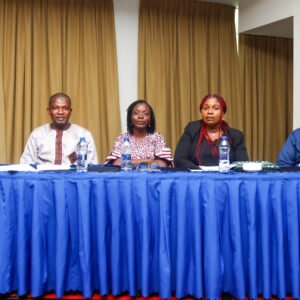
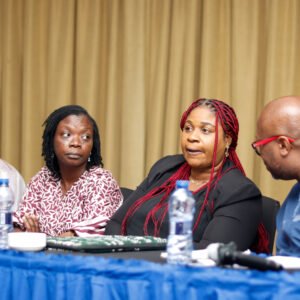
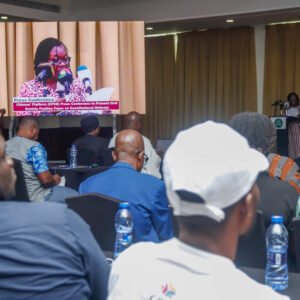
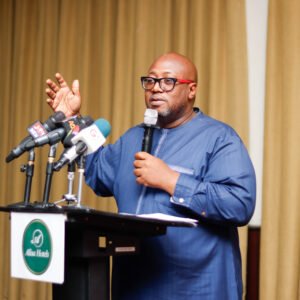
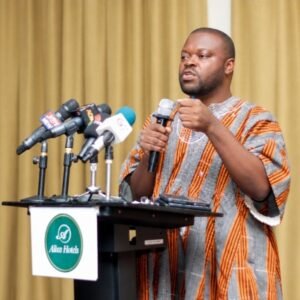
The Citizens Platform on Constitutional Review (CPCR), at a press conference in Accra on Tuesday, September 15, 2026, presented its civil society position paper on the ongoing review of the 1992 Constitution.
The coalition said the proposed reforms represent some of the most far-reaching constitutional changes since 1992, with more than 50 provisions reportedly affected, including over 20 entrenched provisions requiring approval through a referendum.
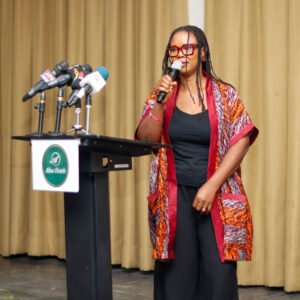
Addressing the media at the Alisa Hotel, Chairperson of the CPCR Steering Committee, Prof. Akosua Keseboa Darkwah, said the reform process must be transparent, inclusive, participatory and protected from partisan control.
She stressed that the Constitution ultimately belongs to the Ghanaian people and, therefore, citizens must be fully involved in every significant step of the review and amendment process.
“We believe that how we make this constitution matters as much as what we put inside it,” Prof. Darkwah said.
CSOs demand Constitutional Reform Roadmap Act
The coalition’s first major demand is for government to introduce and secure the passage of a Constitutional Reform Implementation and Roadmap Act to give the implementation process the force of law.
According to the CSOs, the legislation should clearly establish the sequence of reforms, the institutions responsible for each stage, and firm timelines for completing the various stages.
It should also provide clear milestones covering public consultation, preparation of legislation, parliamentary consideration, civic education, and, where necessary, the conduct of referenda.
The coalition argued that such a framework is necessary because the reform programme, involving more than 50 proposed amendments and over 14 bills, may extend beyond the life of the current Parliament and potentially beyond the 2028 elections.
It therefore warned that without a legally binding timetable, a change in government or political priorities could derail the process.
“Constitutional reform is a national undertaking, and so its success must not depend on the political calendar,” the coalition stated.
The CSOs pointed to previous reform efforts, including an implementation committee established in 2012 and a proposed local government reform referendum in 2019, as lessons Ghana must learn from to avoid allowing constitutional reform proposals to stall.
Implementation committee must build consensus
The coalition is also demanding a clearer and broader mandate for the Constitution Review Implementation Committee.
It wants the committee to serve as a genuine consensus-building body rather than simply translating the government’s position paper into amendment bills.
The CSOs are calling for the committee to have the authority to recommend changes to government positions where the national interest requires it.
They further called for any legislative process that moves ahead of the committee’s work to be paused, specifically mentioning the Conduct of Public Officers Bill, which they said was already progressing before the committee had completed its consultation and reporting process.
The coalition cautioned that restricting the implementation committee to implementing only the government’s preferred positions could undermine public confidence and create the perception that the constitutional reform process had been “hijacked” by a political party.
Separate referendum questions
On the referendum for entrenched constitutional provisions, the CSOs urged the government not to bundle more than 20 different amendments into a single yes-or-no question.
They argued that the proposed amendments address different issues and that voters may support some while rejecting others.
The coalition clarified that it was not necessarily demanding a separate ballot question for every individual amendment but wanted related proposals grouped into a manageable number of clearly defined questions.
It also called for referendum questions to be written in plain language so that voters can understand precisely what each vote would change.
Protected funding for civic education
The coalition further called for dedicated and protected funding for civic education ahead of any constitutional referendum.
It said funding should be secured in law, led by the National Commission for Civic Education (NCCE), and released sufficiently early to allow citizens adequate time to understand and deliberate on the proposed changes.
The CSOs stressed that the constitutional referendum thresholds make extensive public education particularly important.
According to the coalition, citizens should not be expected to make decisions about the future of the Constitution without a fair opportunity to understand the issues before them.
CSOs welcome several government proposals
Despite their concerns, the coalition emphasised that its intervention was not intended to oppose government across the board.
Prof. Darkwah said the CSOs welcomed and supported several proposals contained in the government’s position paper.
Among the areas of agreement are the creation of an independent political parties regulatory commission, regulation of campaign periods and expenditure, stronger financial disclosure requirements, and measures against abuse of incumbency.
The coalition also supports moving the presidential election to the first week of November and holding presidential and parliamentary elections on the same day.
It backs proportional representation in Parliament to broaden political participation and improve representation of women, young people, and persons with disabilities, although it disagrees with simply adding 24 constituency seats.
Other areas supported include allowing dual citizens who are Ghanaian citizens by birth to serve in Parliament, expanding MPs’ ability to introduce bills, making parliamentary votes of censure binding, and restricting certain actions by an outgoing administration between Election Day and the swearing-in of a new president.
The CSOs further support separating the Office of the Attorney General from the Cabinet, creating a separate Minister of Justice, shortening the period for filing presidential election petitions, electing Metropolitan, Municipal and District Chief Executives, and establishing an independent body to determine public-sector remuneration.
They also support expanding the NCCE’s functions, introducing a direct route for citizens to propose constitutional amendments, passing a comprehensive Human Rights Act, and completing the abolition of the death penalty.
Coalition rejects five-year presidential and parliamentary terms
However, the CSOs identified a number of areas where they want the government to reconsider its position.
Chief among them is the proposal to extend the tenure of the President and Parliament from four years to five years.
The coalition wants the existing four-year term retained, arguing that other proposed reforms concerning the election date, transition period, and powers of an outgoing administration adequately address the concerns cited in support of a longer tenure.
It also rejected the proposed framework for limiting presidential appointment powers, arguing that appointments to independent oversight institutions should be transparent, competitive, and merit-based.
Call for separation of Executive and Parliament
The coalition further opposed the continued practice of Members of Parliament serving simultaneously as Ministers, Deputy Ministers or Regional Ministers.
It called for a clearer constitutional separation between the Executive and Parliament and argued that MPs should also be prohibited from serving on boards, governing councils, and procurement committees of publicly funded institutions.
On Parliament’s size, the coalition rejected increasing the number of MPs to 300 through the addition of 24 seats.
Instead, it wants proportional representation studied and implemented within the existing ceiling of 276 MPs.
Independent decentralisation and open MMDCE elections
The CSOs also called for the establishment of an independent constitutional Devolution Commission to coordinate fiscal and administrative decentralisation, assess the viability of districts, and prepare the country for the election of local Chief Executives.
They rejected any arrangement under which MMDCE elections would be subject to presidential nomination, shortlisting, or vetting by institutions under the Executive.
According to the coalition, the elections must be open and unfiltered to give every qualified citizen a fair opportunity to contest.
Stronger citizen participation and financial safeguards
The coalition is also demanding constitutional recognition of citizens’ right to meaningful participation in lawmaking.
It wants government to have a clear constitutional duty to consult citizens and provide genuine opportunities for public input before important laws are passed.
On the District Assemblies Common Fund, the CSOs support increasing the minimum allocation from five to 10 percent of national revenue and transferring the entire amount to Metropolitan, Municipal, and District Assemblies without deductions or central government commitments.
They also called for an end to allocations from the Fund to Members of Parliament, arguing that such allocations blur the distinction between the legislative responsibilities of MPs and the executive functions of District Assemblies.
The coalition further wants the proposed Democracy Fund, as well as funding for key democratic institutions, including the Electoral Commission, NCCE, and other accountability institutions, to be constitutionally protected and ring-fenced.
Anti-corruption, media freedom, and environmental rights
In the fight against corruption, the CSOs rejected the proposal for a statutory Public Ethics Commission in place of the independent, constitutionally established Anti-Corruption and Ethics Commission proposed by the Constitution Review Committee.
They want responsibility for investigating and prosecuting corruption consolidated under an independent commission, with the Office of the Special Prosecutor integrated into it and safeguards against politically influenced discontinuance of corruption prosecutions.
The coalition also called for reforms to the Council of State, including changes to its composition and tenure, as well as stronger powers relating to appointments and removals of independent constitutional officeholders.
On media freedom, it opposed proposals to remove the National Media Commission’s constitutional responsibility for protecting the independence of state-owned media.
The CSOs said the Commission’s authority, press freedom mandate, and funding must remain constitutionally protected.
They also want the Constitution to recognise the right to a clean, healthy, and sustainable environment and protect affected communities’ right to meaningful participation, including free, prior, and informed consent.
Security oversight and long-term development planning
The coalition rejected the absence of an independent mechanism for investigating abuses by security services.
It proposed a specialised and functionally independent security services oversight mechanism within CHRAJ, with sufficient authority and resources to investigate complaints independently of institutions whose officers are accused.
The coalition also called for a long-term National Development Plan approved by Parliament rather than simply relying on the proposed National Development Planning Framework.
‘The Constitution belongs to the people’
Prof. Darkwah said the CSOs’ position is ultimately anchored in the belief that constitutional reform must be a genuinely national undertaking.
She reiterated that the Constitution does not belong to the government of the day, Parliament, political parties, lawyers, or experts, but to the Ghanaian people.
The Citizens Platform on Constitutional Review, convened by CDG Ghana, Democracy Hub and Star-Ghana Foundation, has grown into a coalition of more than 100 civil society organisations, labour unions, professional bodies, and individual citizens.
The platform said its work is focused on ensuring that citizens understand the constitutional review process, participate meaningfully, and are able to see how their contributions influence the final outcome.
The coalition therefore urged government and all political actors to treat the constitutional reform exercise as a national process requiring broad consensus rather than partisan ownership.
It said the ultimate test of the reforms would not only be the provisions eventually adopted, but whether Ghanaians can have confidence that the process was transparent, inclusive, and genuinely reflective of their aspirations.
Source:Joseph Kobla Wemakor