Civil Society leaders meet in Accra to push bold family law reforms and women’s rights agenda
Civil society leaders, legal experts, gender advocates, and policy influencers from across Ghana gathered today at the Alisa Hotel in Accra to begin a powerful two-day convening aimed at pushing forward one of the most critical conversations of our time: advancing family law reforms and strengthening women’s rights in Ghana.
The event, organized by the Initiative for Gender Equality and Development in Africa (IGED-Africa) in collaboration with the Solidarity for African Women’s Rights Network (SOAWR) and hosted by Equality Now, Kenya, is seen as a game-changer in the push for legal equality and justice for Ghanaian women.
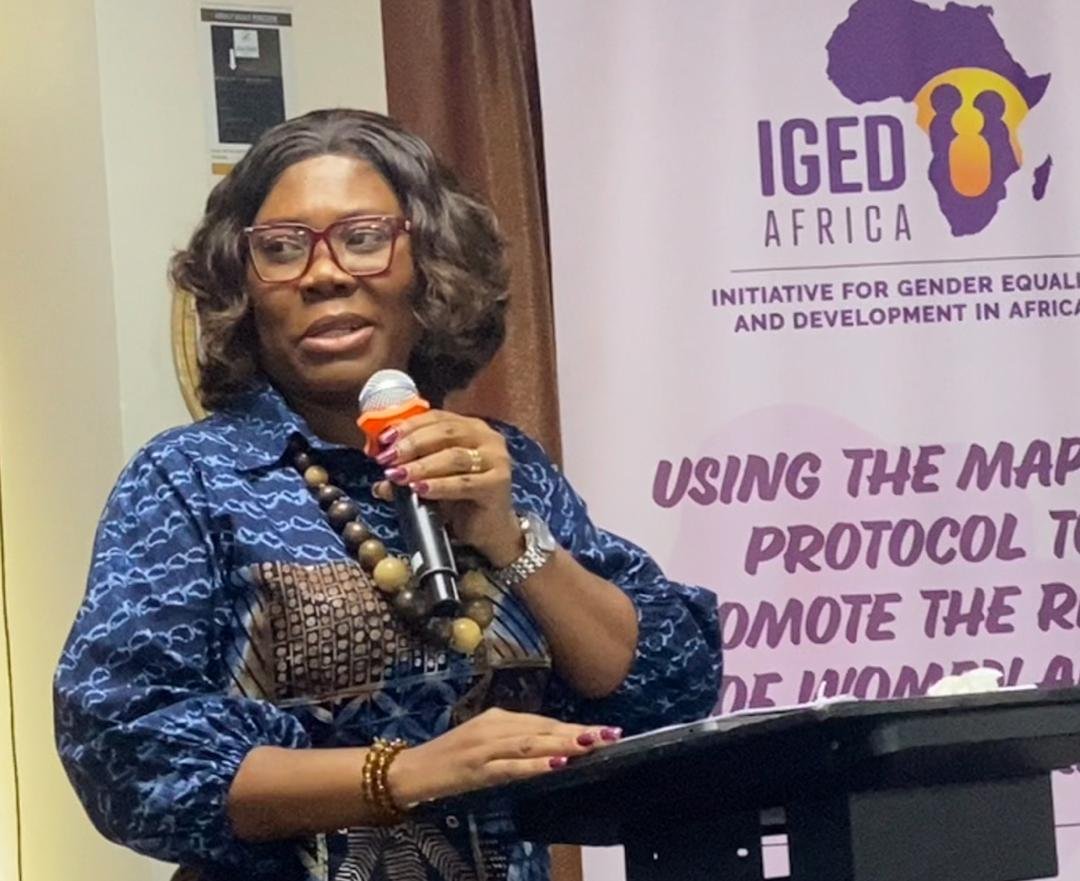
Opening the workshop with an impassioned welcome, Sylvia Horname Noagbesenu, Executive Director of IGED-Africa, emphasized the deeply personal nature of family law. “It is not about legal technicalities.
It is not an issue for lawyers alone. Family law affects every one of us,” she said.
Her remarks underscored the urgency of the moment and the need for all stakeholders—civil society, government, donors, and communities—to see family law reform not as a niche legal issue, but as a national development priority.
She shared that IGED-Africa itself was born out of a long-standing commitment to address systemic issues around land rights, spousal property rights, and succession that continue to leave countless women and families vulnerable.
From her words, it became clear that the convening was more than a workshop—it was a call to action. It was a moment to reflect on past struggles, celebrate recent victories like the passage of the Affirmative Action (Gender Equity) Act 2024, and plot the way forward toward even more transformative change.
Representing Equality Now, Esther Waweru, Senior Legal Advisor, delivered a stirring keynote, laying bare the legal contradictions that continue to entrench gender inequality in Ghana.
Speaking from a script to avoid “politician-style digressions,” she warmly welcomed participants and quickly got to the heart of the matter.
Ghana, she reminded the room, was identified as a priority country during the 2024 Kampala Regional Consultation on Family Law Reform in Africa, owing to the remarkable efforts of activists and the potential for real legislative change. Yet despite these efforts, Waweru said, progress has been unacceptably slow.
She cited articles from the Maputo Protocol that obligate governments to reform discriminatory family laws and implement protective legal frameworks for women, and she held up Ghana’s long-delayed Spousal Property Rights Bill and the stalled Intestate Succession Amendment Bill as painful examples of unfulfilled promises.
“More than three decades later, this obligation remains unfulfilled, perpetuating a violation of women’s rights,” she said, referencing Article 22 of Ghana’s own Constitution that called for legislation on spousal property rights “as soon as practicable.”
Her pointed reflection: “I guess it’s not practicable!”—drew knowing murmurs from the audience.
The day’s sessions built on this critical foundation with in-depth presentations from legal advocates and experts deeply involved in Ghana’s family law reform movement.
Sheila Minka-Premo, Convenor of the Affirmative Action Law Coalition, provided a comprehensive breakdown of the newly passed Affirmative Action Act.
While applauding the historic achievement, she laid bare the implementation challenges still ahead and the risk that without active follow-up, the law could remain a paper promise rather than a catalyst for real change.
She urged participants to remain vigilant, united, and loud in demanding that the Act be implemented across all sectors and levels of government.
Taking the conversation deeper, Lois Aduamoah-Addo of WiLDAF Ghana unpacked the complexities of Ghana’s intestate succession landscape.
In her presentation, she outlined the pressing need for the amendment of existing laws that continue to disadvantage widows and children—especially under customary and religious practices that often go unchallenged in local communities.
Her session revealed just how far the country still has to go to create fair inheritance systems that protect vulnerable family members after the death of a spouse or parent.
Minka-Premo returned to the stage to take on the thorny issue of spousal property rights, leading a robust session on the Spousal Property Bill and the frustratingly slow progress it has seen over the years.
With clarity and authority, she explained the contents of the bill, the benefits it promises for women, and the political and social forces that continue to delay its passage.
The audience was left with a clear message: legal reform is not just about drafting good laws—it is about fighting every day to ensure they are passed, implemented, and enforced.
As the conversations progressed, participants grappled with difficult but necessary questions.
Why, despite constitutional backing, has the Spousal Property Bill not become law after more than 30 years? How can the newly passed Affirmative Action Act be turned into real, everyday outcomes for women and girls across Ghana? What stands in the way of the Intestate Succession Bill’s passage, and who continues to benefit from the delay? And most importantly, how can Ghana navigate the tensions between statutory, customary, and religious laws—especially when they so often collide in ways that reinforce inequality?
Beyond the presentations, the energy in the room was charged with purpose.
Legal professionals, grassroots activists, and organizational leaders engaged in dynamic discussions, shared personal stories, and brainstormed advocacy strategies.
There was a sense of urgency, but also of solidarity. Participants agreed that the road ahead would not be easy—but it would be walked together.
The workshop also paid tribute to the partners who have helped sustain these reform efforts over the years, including the African Women’s Development Fund (AWDF) which was recognized not just as a donor, but as a strategic movement-building ally.
Their support, along with that of other coalition members across Africa, was acknowledged as instrumental in helping Ghana remain on course.
The gathering closed with a strong call to action.
Participants will reconvene tomorrow to begin developing a national action plan focused on advocacy priorities, policy engagement, and coalition-building.
The goal: to align Ghana’s family laws with its constitutional promises, the regional obligations under the Maputo Protocol, and the global human rights standards to which it is committed.
One thing is clear—this is not just another policy talk shop. This is a movement. And if the passion and expertise on display today are any indication, Ghana is closer than ever to finally delivering family laws that reflect justice, dignity, and equality for all.
Source:Joseph Wemakor