NDC to Hold Constituency Elections Across 276 Constituencies This Weekend
The National Democratic Congress (NDC) will hold its constituency executive elections across all 276 constituencies in Ghana on October 24 and 25, 2026, as part of efforts to strengthen its grassroots structures and renew its leadership.
Addressing a press conference at the party’s national headquarters in Accra, the NDC’s General Secretary, Fiifi Fiavi Kwetey, said 265 constituencies would conduct their elections on Saturday, October 24, while the remaining 11 would vote on Sunday, October 25.
He stressed that the credibility of the internal elections was crucial not only to the party’s members and supporters but also to Ghana’s democratic institutions.
“As a governing party, we recognise that our conduct must reflect the democratic standards we uphold in public life,” he said, urging members to demonstrate that political organisations could manage competition fairly, resolve disagreements through established procedures, and emerge stronger and more united.
16,468 applications recorded
Providing an update on preparations, Mr Kwetey said the party’s nomination process recorded 16,468 active applications for constituency-level executive positions across the country.
Of the total, 15,049 applications had been submitted, representing approximately 91.4 per cent, while 1,419 remained in draft form, accounting for 8.6 per cent.
He added that 370 records had been identified as incomplete and required further attention to ensure data completeness.
Female applicants accounted for 16 percent of the reported applicants, a figure that highlights the need to sustain efforts to promote women’s participation in political leadership.
According to the General Secretary, the level of participation reflected considerable interest among party members in competing for leadership positions and contributing to the party’s decision-making processes.
The constituency elections form part of a broader reorganisation exercise that began with membership registration, validation of the membership register, and elections across more than 40,600 branches nationwide.
The exercise is intended to renew the party’s leadership at the constituency, regional, and national levels.
Four key electoral protocols announced
To safeguard the integrity of the elections, Mr. Kwetey outlined four key protocols that all aspirants, delegates, and election officials must observe.
First, he said proxy voting would not be permitted, insisting that every eligible delegate must be physically present to cast their vote. No individual would be allowed to vote on behalf of another delegate.
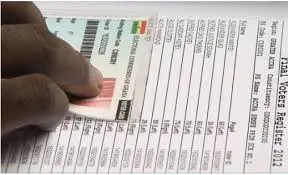
Second, delegates would be required to present an approved identification document for verification before voting. Acceptable documents include a valid voter identification card, the party’s plastic membership identification card or a government-issued identification card.
He urged delegates to ensure they had the required identification before arriving at their respective polling centres.
Third, ballots for the women’s and youth conferences must be kept securely and counted only after the main constituency executive elections have concluded.
Fourth, tally voting would not be permitted for the other eight positions covered by the directive. Each delegate would be entitled to one vote for each applicable position, in accordance with the prescribed voting procedures.
Mr. Kwetey warned that the protocols were binding and called on election officials to apply them consistently across all voting centres.
“Our position is straightforward. The rules must apply equally to everyone,” he stated.
Ghana Police to take charge of election security
The NDC General Secretary said the Ghana Police Service would have sole responsibility for security at all election centres, with a mandate to maintain law and order, protect persons and property, prevent intimidation and violence, and ensure that delegates could vote freely.
He further announced that personal security details accompanying government officials, political officeholders or other individuals would not be permitted within voting periods.
He cautioned against attempts to use public office, personal influence, or security personnel to intimidate delegates or interfere with the electoral process.
The party, he said, would not tolerate threats, assaults, obstruction of election officials, destruction of voting materials, or any other conduct that endangered participants or undermined the credibility of the elections.
“Competition for party office is not a justification for any form of violence,” Mr Kwetey said, urging aspirants to conduct themselves with maturity and recognise that internal political contests should not come at the expense of the party’s unity.
He called on delegates to exercise their voting rights responsibly and urged election committees to perform their duties impartially.
EC to supervise electoral process
According to Mr Kwetey, the Electoral Commission of Ghana will conduct and supervise the elections, working with the party’s election directors and constituency election committees.
He called on aspirants, delegates, and election officials to cooperate with the relevant authorities and adhere strictly to the approved timetable and electoral procedures.
The party also appealed to the media to report accurately, responsibly, and impartially, distinguishing verified information from allegations and avoiding sensational reporting that could unnecessarily heighten tensions.
Members of the public were similarly urged to support peaceful elections and recognise the importance of credible internal party processes to Ghana’s broader democratic culture.
NDC advances reorganisation agenda
Earlier at the same press conference, the party’s Deputy General Secretary, Dr. Peter Boamah Otokunor, outlined the progress made in the ongoing reorganisation exercise.
He said the NDC had completed its branch elections, producing nine executives at each branch across more than 40,000 branches and close to 380,000 delegates.
He explained that the party was progressing through constituency and regional elections before moving to the national level.
Dr Otokunor disclosed that nominations for national executive positions opened on October 20 and closed on October 21, with approximately 137 party members picking nomination forms to contest various positions.
He said 14 national offices would be contested, with 25 individuals expected to be elected to the positions, including multiple officeholders for certain roles.
According to him, five aspirants had picked nomination forms to contest the national chairmanship, while 19 had expressed interest in the vice-chairmanship. Two members had picked forms for the general secretary and 11 for the deputy general secretary.
He added that national executive elections were scheduled for December 19, 2026, while the youth and women’s elections would be held separately on December 12 and 13.
Party unity takes centre stage
As the party prepares for the constituency polls, Mr Kwetey urged members to place the collective interest of the NDC above individual ambitions.
He maintained that the party’s strength would be measured not merely by its membership and nationwide reach but also by its ability to uphold democratic principles during periods of intense competition.
“The party is bigger than every single individual in the party,” he declared, adding that unity was more valuable than any single position.
He expressed confidence that the party could complete the electoral exercise peacefully and credibly, producing leaders who enjoy the confidence of their constituents while strengthening the NDC’s organisational structures.
The elections represent a significant stage in the party’s internal reorganisation as it prepares to renew leadership across its constituency, regional and national structures.
Source: Joseph Kobla Wemakor