Dr. Joseph Wemakor rallies support for Ghana’s ratification of African Disability Protocol
Executive Director of Human Rights Reporters Ghana (HRRG), Dr. Joseph Kobla Wemakor, has reaffirmed his organisation’s commitment to supporting advocacy efforts aimed at advancing disability inclusion and the ratification of the African Disability Protocol (ADP) in Ghana.
According to him, the media must play a more proactive role in amplifying the voices of persons with disabilities and ensuring that disability-related concerns remain central to national conversations and policy reforms.
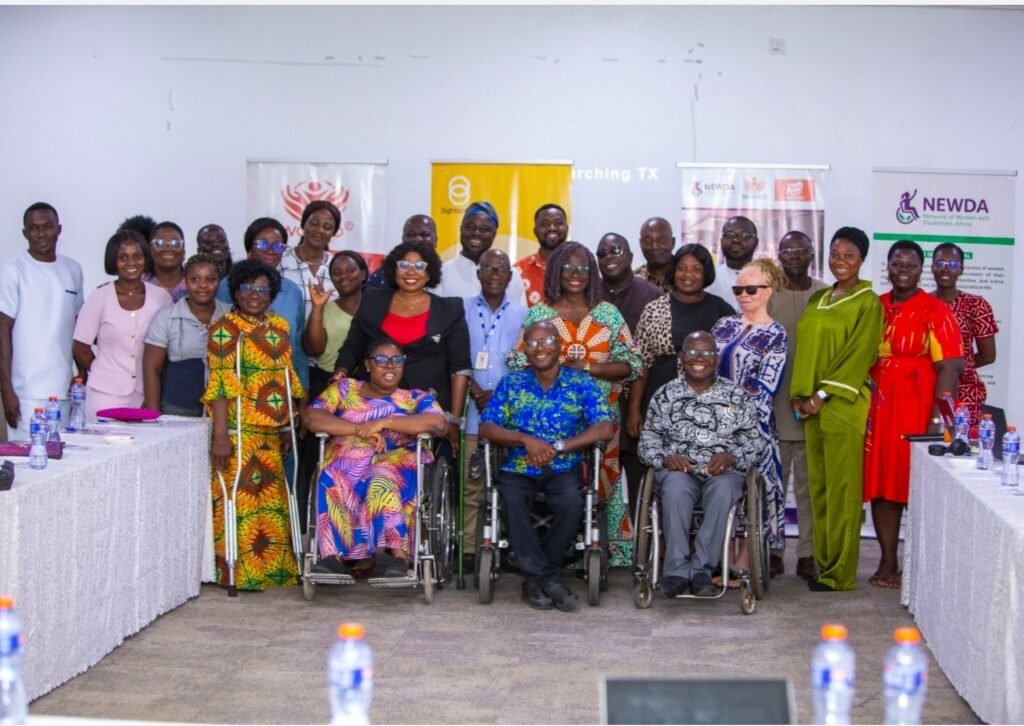
Dr. Wemakor made the remarks during an Inception and Stakeholder Engagement Workshop organised by the Women with Disability Development and Advocacy Organization (WODAO) in partnership with the Network of Women with Disabilities Africa (NEWDA) at the Tomreik Hotel in Accra.
The workshop, held under the theme “Strengthening the Women with Disabilities Movement and Advancing the Ratification of the African Disability Protocol in Ghana,” brought together parliamentarians, disability rights advocates, journalists, development partners, civil society organisations and government representatives.
Delivering a solidarity message at the event, Dr. Wemakor commended WODAO and NEWDA for spearheading what he described as a bold and timely initiative to promote disability rights and inclusion, especially for women and girls with disabilities.
He noted that women with disabilities continue to face multiple forms of discrimination, exclusion and barriers that limit their participation in education, employment, leadership and national development.
“The media has a crucial responsibility to amplify the voices of persons with disabilities and ensure that their issues remain visible within public discourse and policy discussions,” Dr. Wemakor stated.
He pledged HRRG’s support towards promoting disability rights advocacy, inclusive governance and stakeholder collaboration to help accelerate Ghana’s ratification of the African Disability Protocol.
According to him, ratifying the protocol would strengthen Ghana’s legal and policy framework on disability inclusion while reinforcing the protection of the rights and dignity of persons with disabilities, particularly women and girls.
Dr. Wemakor further called on Parliament, government institutions, civil society organisations, journalists and development partners to work collectively towards building a more inclusive society where persons with disabilities are empowered to actively participate in national development.
The workshop also featured remarks from key stakeholders within Ghana’s disability sector, all of whom stressed the urgent need for Ghana to ratify the African Disability Protocol.
Convener of NEWDA, Prof. Augustina Naami, highlighted the persistent challenges confronting women with disabilities, including discrimination, unemployment, exclusion and vulnerability to gender-based violence.
She stated that although Ghana had enacted the Persons with Disabilities Act, 2006 (Act 715), and the National Gender Policy, the existing legal frameworks did not adequately address the unique concerns of women and girls with disabilities.
“Our vision is to create an inclusive society where women with disabilities thrive with equality, dignity and full participation,” she said.
Representing the Parliamentary Caucus on Persons with Disabilities, Member of Parliament for Suhum, Hon. Frank Asiedu Bekoe, reaffirmed Parliament’s commitment to disability-inclusive legislation and policy reforms.
He stressed that ratification of the African Disability Protocol would reinforce the protection, participation and inclusion of persons with disabilities in Ghana.
Programme Manager at Sightsavers Ghana, Mohammed Abdul-Razak, also expressed concern over Ghana’s delay in ratifying the protocol despite the country’s reputation for championing disability rights and inclusion in Africa.
Project Lead and Executive Director of WODAO, Veronica Denyo Kofiedu, explained that the initiative forms part of a broader advocacy campaign funded by ADD International under the Disability Justice Fund for Women.
She said the project seeks to strengthen leadership among women with disabilities, amplify their voices and build strategic partnerships capable of influencing national policy and advocacy.
The workshop ended with renewed calls for stronger stakeholder collaboration and sustained advocacy efforts to ensure Ghana ratifies and implements the African Disability Protocol.