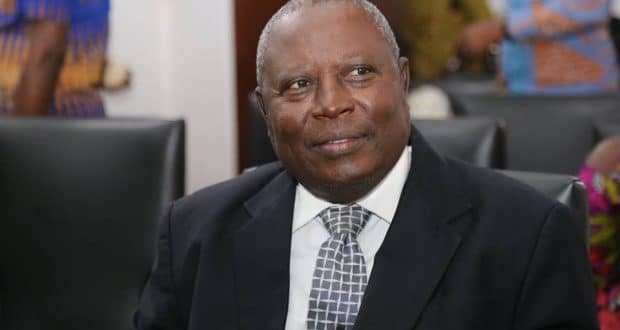
‘Youth Work Must Be Driven by Policy, Not Passion’ — George Opare Addo
In a firm call for systemic transformation, the Minister for Youth Development and Empowerment, Hon. George Opare Addo, has urged that youth work in Ghana be grounded in robust policy frameworks rather than driven solely by passion.
Delivering his remarks through Alhaji Inusah Mahama, Deputy CEO of the National Youth Authority (NYA), the Minister addressed stakeholders at the relaunch of the Association of Youth Work Practitioners (AYWP) on September 30 in Accra.
He stated unequivocally that while passion has played a critical role in youth work, it is not sufficient to deliver sustainable, scalable results.
“Youth work must be built on policy, not passion. We cannot continue to let good intentions guide our work with young people. If youth development is to be sustainable and impactful, it must be structured, professionalized, and policy-driven,” the Minister declared.
Speaking on his behalf, Alhaji Inusah Mahama emphasized the fragmented state of youth development initiatives in the country. He cited the lack of standardization, inadequate coordination, and insufficient training structures as major barriers preventing youth work from becoming a reliable pillar of national development.
“Without clear policies and professional standards, youth work risks becoming a series of disjointed efforts rather than a cohesive national force,” he warned.
Reinforcing the Minister’s position, he added that Ghana’s future hinges on the quality of investment made in its youth today.
“It is time to shift from good intentions to good governance in youth work. We must put systems in place that ensure continuity, impact, and accountability.”
Theodora Anti Williams, Co-Chair of the AYWP, echoed the call for reform. She highlighted the urgent need to elevate youth work from voluntary service to a fully recognized profession.
“Our young people deserve nothing less than professional dedication backed by strong policies that protect their rights and unleash their potential,” she stated. She also advocated for the establishment of certification systems and accredited training programs to give youth workers the tools and legitimacy they need to thrive.
Offering a broader, international perspective, Layne Robinson, Head of Social Policy Development at the Commonwealth Secretariat, emphasized that professionalizing youth work is not just a national imperative, but a global standard. Drawing on the Commonwealth’s 50-year commitment to youth development, Robinson underscored the importance of ethics, training, and international collaboration.
“We want the very best for young people. Just as we expect doctors and teachers to be trained professionals, we must demand the same of youth workers,” he said.
He challenged the audience with a poignant reflection:
“If youth work disappeared from your country today, what would change?” Robinson then invited Ghana to take a leading role at the upcoming 5th Global Youth Work Conference in Malaysia this November, further encouraging the country to shape international youth development conversations.
In his solidarity message, Dr. Joseph Wemakor, Convener of the Ghana CSOs Platform on SDGs (Youth) and Executive Director of Human Rights Reporters Ghana (HRRG), connected youth work to Ghana’s broader development goals.
“Youth are not just the leaders of tomorrow—they are the changemakers of today,” he said passionately. He called for greater recognition, targeted investments, and strategic partnerships to embed youth work into national development strategies.
“The vibrancy of our democracy and the strength of our economy depend on how well we empower our youth today.”
Tanya Merrick Powell, Co-Chair of the Commonwealth Alliance of Youth Workers’ Associations (CAYWA) and Technical Director of the Jamaica Professional Youth Workers Association, shared insights on the shared struggles of youth workers.
She highlighted that many of them experience the same marginalization as the young people they serve.
“We are facilitators, mentors, and sometimes even surrogate parents. We are underpaid, often excluded, but we keep going because that is what we do,” she stated.
Powell urged youth practitioners in Ghana to root their professional journey in Afrocentric values and cultural identity to ensure the sustainability and relevance of their work.
“Youth work must go beyond policy papers and talk shops. It must be grounded in local realities and history.”
Peter Anum, Coordinator of CAYWA, emphasized the critical need to invest in youth workers themselves as enablers of change.
“To truly empower young people, we must first empower those who serve them—with the right tools, knowledge, and supportive policies,” he said. He underscored the need for innovation, continuous capacity-building, and collaboration across sectors to ensure long-term impact.
The relaunch of the Association of Youth Work Practitioners (AYWP) marks a defining moment in Ghana’s youth development landscape.
From policymakers to practitioners, from civil society to international partners, one message was echoed loudly and clearly: the time to move from passion to policy is now.
Youth work must be institutionalized, professionalized, and resourced—because the future of Ghana depends on it.