The Executive Director of Human Rights Reporters Ghana (HRRG), Dr. Joseph Kobla Wemakor, has called for intensified collaboration and stronger advocacy to advance disability inclusion, stressing that exclusion of persons with disabilities weakens democratic governance and human rights systems.
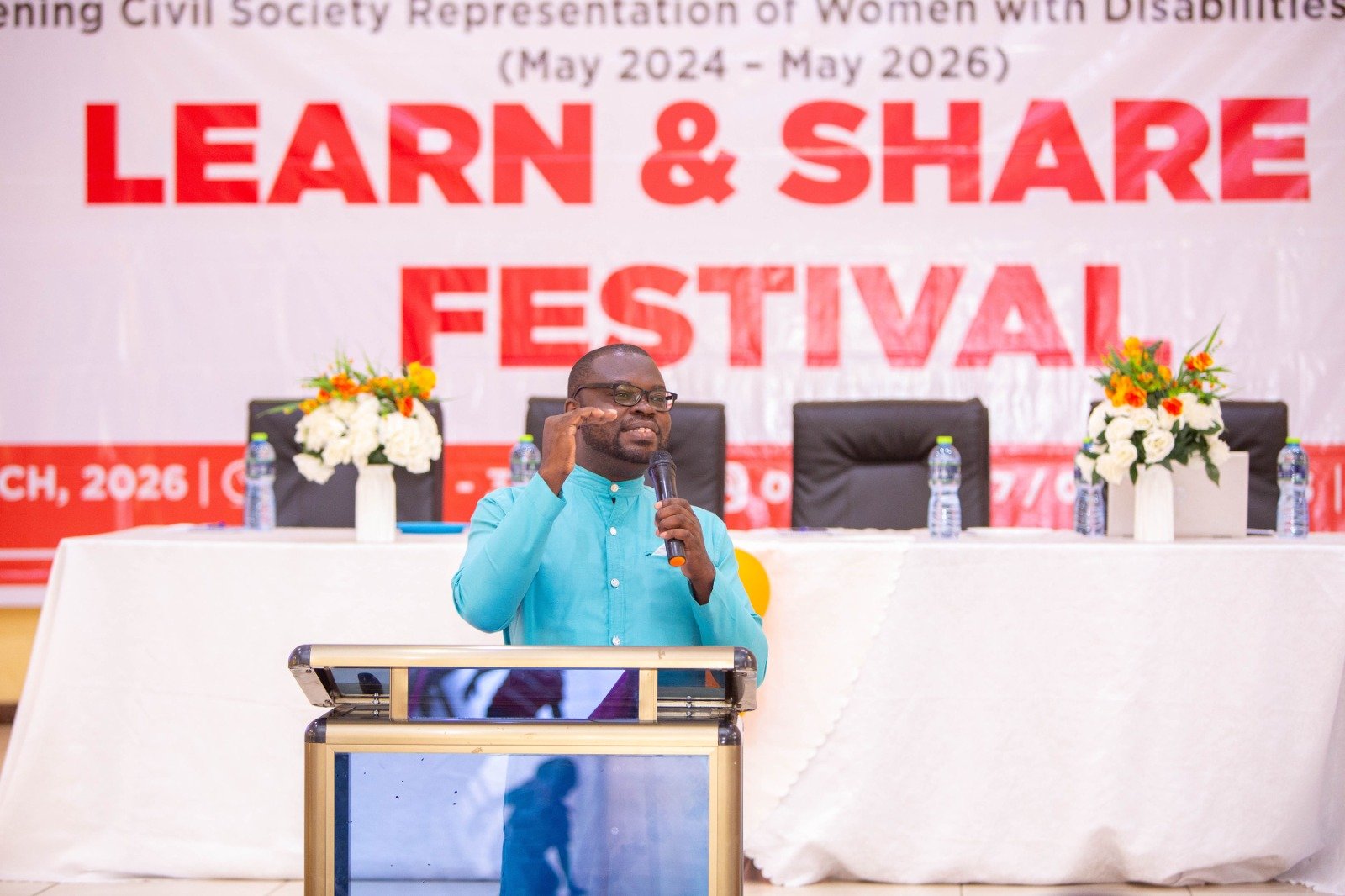
Delivering a solidarity message at a high-level dialogue held during the Learn and Share Festival in Ho on Tuesday, March 31, 2026, Dr. Wemakor underscored the power of storytelling and representation in amplifying the voices of women with disabilities.
“This is not just a media issue—it is a human rights issue. When voices are excluded, democracy itself is weakened,” he stated.
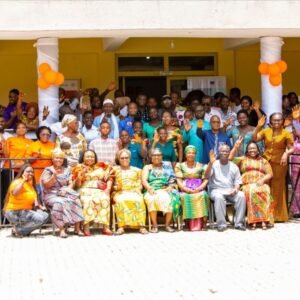
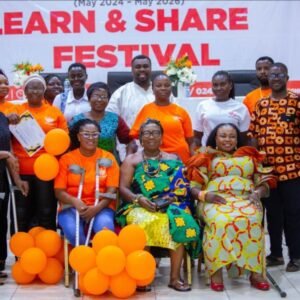
The event, organized by the Women with Disability Development & Advocacy Organization (WODAO), marked the conclusion of a two-year European Union-funded project titled “Strengthening Civil Society Representation of Women with Disabilities in Ghana,” implemented in partnership with Sightsavers and the ABAK Foundation.
Bringing together government officials, civil society organizations, development partners, and organizations of persons with disabilities, the forum provided a platform to reflect on progress, challenges, and the way forward for disability inclusion in Ghana.


Dr. Wemakor highlighted inclusive storytelling as a critical tool in reshaping narratives around disability and ensuring that persons with disabilities are not only seen but heard.
“Storytelling is power. Visibility is power. Voice is power,” he emphasized, calling on media practitioners and stakeholders to prioritize ethical and inclusive reporting.
He further announced that Human Rights Reporters Ghana will host a high-level global dialogue at RightsCon 2026 scheduled for May 6, 2026, at the Mulungushi International Conference Centre in Lusaka, Zambia.
The session, themed “Silenced Twice: Press Freedom and Disability Voices Under Threat in Africa,” will convene journalists, disability rights advocates, policymakers, and digital rights actors to explore ways of strengthening inclusion in media and digital spaces.
According to him, the dialogue will focus on promoting ethical reporting on disability issues, enhancing the capacity of persons with disabilities to tell their own stories, and addressing the risks of digital exclusion.
“It is about ensuring that media systems are inclusive and that persons with disabilities are empowered to shape their own narratives,” he explained.
Contributing to the panel discussion, Mrs. Thywill Eyra Kpe, Volta Regional Director of the Department of Gender under the Ministry of Gender, Children and Social Protection, reiterated that disability inclusion is a constitutional right enshrined in Article 29 of the 1992 Constitution.
She noted that although Ghana has made progress in developing legal frameworks, gaps remain in implementation.
Madam Stella Mawusi Agbezuhlor Mawutor, Volta Regional Director of the Department of Social Welfare, highlighted increasing awareness and the role of civil society in driving change.
“We are making progress, but there is still more to be done,” she said.
From the perspective of persons with disabilities, Ms. Elikplim Klu, Volta Regional President of the Ghana Federation of Disability Organisations (GFD), stressed that women with disabilities face “double discrimination” and called for deliberate efforts to ensure inclusion.
“Inclusion is not charity—it is our right,” she stated.
Princess Lovia Tetteh, Executive Director of LoveAid Foundation, underscored the importance of inclusive programming and stakeholder engagement in achieving sustainable development.
She noted that advocacy efforts had contributed to increasing the allocation of the District Assembly Common Fund for persons with disabilities from three to five per cent.
The discussion also highlighted key challenges, including stigma, inaccessible infrastructure, limited leadership opportunities, and economic marginalization.
Stakeholders called for improved data systems, targeted capacity-building, and stronger partnerships to address these barriers.
Beneficiaries of the project shared testimonies of transformation, with Miss Juliana Ntenye describing how the initiative boosted her confidence and enabled her to actively engage in advocacy.
Other participants, including Madam Sherita Kudoda and Mr. Moses Foli, also highlighted increased awareness and empowerment through the project.
Moderating the session, Ms. Veronica Denyo Kofiedu, Executive Director of WODAO, called for the urgent passage of the Legislative Instrument to operationalise the Persons with Disabilities Act.
As the event concluded, stakeholders reaffirmed their commitment to sustaining the gains made under the project and advancing disability inclusion across Ghana.
Dr. Wemakor’s message, however, remained a defining takeaway: true inclusion requires not only policies, but voices—and those voices must be heard.